Facebook Ads Not Working? 5 Real Reasons (and Fixes)
When your Facebook ads aren't working, the problem is almost always that nobody stops scrolling long enough to reach your offer. The budget, the targeting, the pixel — none of it fires if the first line reads like every other ad in the feed. Meta even has a name for the number that decides this: hook rate, the share of people who watch past the first three seconds. Fix the hook and most "my Facebook ad isn't working" problems fix themselves.
I look at ads all day. When you run enough of them through a real critique — scoring the hook, the clarity, the call to action, and the visual the way a media buyer would — the same five failures show up again and again. Here are the five reasons your Facebook ads aren't working, and how to fix each one.
You can paste your own ad into the free roast tool and get a Butter Score plus a line-by-line critique in about twenty seconds. But first, the patterns.
Is your ad not converting or not even delivering?
Before the five causes, separate two problems people lump together. "Facebook ads not working" usually means one of two things, and the fix is different for each:
- Not delivering — low reach, high CPMs, ads stuck in review or "learning limited." That is an account, budget, or policy problem.
- Not converting — plenty of impressions and clicks, but no sales. That is a creative and offer problem.
If you are getting impressions but no results, your Facebook ad is not converting, and the five causes below are where to look. If you are barely getting served at all, check your budget, audience size, and whether the ad passed review first — then come back here for the creative.
1. You lead with your name instead of their problem
The fastest way to lose someone is to open with your brand. "Iron Peak Fitness — New Year, New You" tells the reader nothing they care about. Compare it to "Tired of paying for a gym you visited twice in January?" One is about you. The other is about them.
Readers give your brand attention only after you've earned it. Open with the pain or the desire, name the exact situation they're in, and let them recognize themselves in the first line. The logo can wait.
Fix: rewrite your first line so it could only be about your customer, not your company. If you deleted your brand name and the line still makes sense as a personal thought your buyer has, you're close.
2. Your offer is a checklist, not a promise
"State-of-the-art equipment, certified trainers, and a welcoming community" is a brochure. It lists features and asks the reader to do the work of imagining why any of it matters. Nobody leaves the couch for a feature list.
An offer converts when it makes a specific promise about the outcome. Not "certified trainers" but "show up three times a week and we'll make sure you actually keep going." Features describe the product. Promises describe the reader's life after they buy.
Fix: take your top feature and finish the sentence "which means you'll be able to ___." That ending is your real offer.
3. Your urgency is the same fake urgency everyone uses
"Only 3 spots left!!!" with no number that ever changes is the most copy-pasted line in the feed, and buyers have been trained to ignore it. Fake scarcity doesn't create pressure. It creates suspicion, and suspicion kills conversions faster than a boring headline.
Real urgency comes from a real constraint — a cohort that starts Monday, a price that goes up on a date, a bonus that expires. If your scarcity isn't true, cut it entirely. A clean offer with no urgency beats a good offer wrapped in an obvious lie.
4. Your call to action begs instead of leads
"Click below to learn more" is the ad equivalent of standing in the corner hoping someone notices you. It asks for a click without telling the reader what happens after they give it, so they don't.
A strong call to action names the next step and the payoff in the same breath. "Get your first-week plan" beats "Learn more" because the reader knows exactly what they'll have thirty seconds from now. Specific beats polite every time.
5. Nothing in the ad is actually specific
This is the quiet one, and it's usually the killer. Vague ads feel safe to write and they're invisible in the feed. "We help businesses grow" could be an accounting firm, a gym, or a cult. Specificity is what makes a claim believable and a scroll stop.
Numbers, names, exact situations, the thing your customer said out loud last week — that is what earns attention. The more specific the line, the more it feels written for one person, and one person is who you are actually trying to reach.
Fix: find the vaguest sentence in your ad and replace one abstract word with a concrete detail. Do it three times and the whole ad tightens.
How to tell which cause is killing your ad
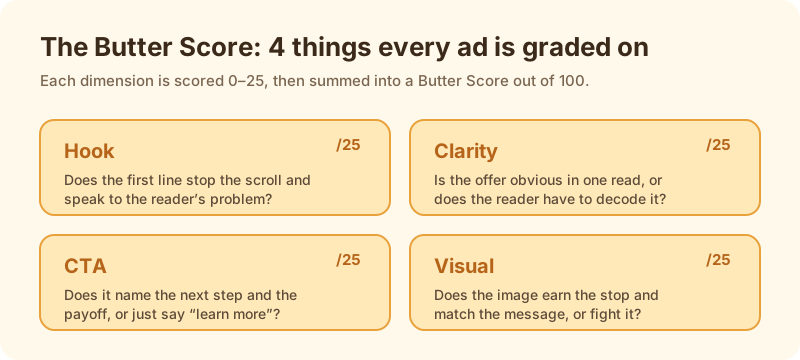
You can guess, or you can score it. Run your ad through the free roast tool and you get each of the four dimensions — hook, clarity, CTA, and visual — scored out of 25, plus a rewrite of your weakest line. Most ads that "aren't working" score low on hook and specificity and high on nothing. Seeing the number is what makes the fix obvious.
If you want the rewrite done for you and unlimited roasts while you iterate, Butter Pro rewrites every line and tracks your scores across versions so you can see the ad actually getting stronger.
Frequently asked questions
Why are my Facebook ads getting impressions but no conversions? Impressions without conversions is a creative and offer problem, not a targeting one. The most common cause is a weak hook — people see the ad but the first line doesn't stop them, so they never read the offer. Score the hook first.
How long should I run a Facebook ad before deciding it's not working? Give it enough budget to exit the learning phase — Meta suggests roughly 50 conversion events per ad set per week. If it's still flat after that with decent impressions, the creative is the issue, not the algorithm.
Can a bad image make a good ad fail? Yes. If the visual doesn't earn the stop or it fights the message, the best copy never gets read. The visual is one of the four scored dimensions for exactly this reason.
What's the single fastest fix for an ad that isn't converting? Rewrite the first line so it's about the reader's problem, not your brand. Hook rate moves more conversions than any other single change.
The short version
Facebook ads that aren't working almost always share the same root cause: the ad talks about the advertiser instead of the reader, so the scroll never stops. Fix the hook, make one real promise, cut the fake urgency, and get specific. Then roast the new version before you spend another dollar boosting it.
Related reading: Roast My Ad — how the free critique works, 7 Facebook ad examples that actually sold, and the best AdCreative.ai alternative for critiquing ads.
Your turn.
Paste your ad (or screenshot it) and get a brutal Butter Score in 20 seconds. Free.
🔥 Roast my ad free →